Leo Frigo Bridge–Repair Design

The Wisconsin DOT was set to request bids this week for repairs to the Leo Frigo Memorial Bridge on I-43 in Green Bay, with an anticipated start of construction on November 4th and reopening of the bridge on January 17th.  The repair will consist of using drilled shafts installed adjacent to the existing piers with a post-tensioned extension of the pile cap to transfer the loads to the shafts.  A schematic of the design from Wisconsin DOT (via Milwaukee Wisconsin Journal Sentinel)

Scot Becker, director of the Bureau of Structures and the state’s bridge engineer, said the fix will consist of installing four concrete shafts beneath five affected piers to take over support from corroded underground steel structures, called pilings. Then, the bridge itself will be jacked up 2 feet, and concrete and steel will be poured to keep the bridge in position.

The bridge, which spans the Fox River in Green Bay, has been closed since late September, after pilings became corroded and buckled under one of the piers, causing a 400-foot-long section of the bridge to sink 2 feet. Since then, it has drooped another half inch, and the state is monitoring the bridge for further movement.

An investigation concentrating mainly in the area from Quincy St. to the Fox River found that soil surrounding the pier contained industrial byproducts over wetlands, which caused the corrosion.

Temporary supports are already being installed by Lunda to shore up the sagging spans until the repairs can be completed.

The Green Bay Press Gazette has a page archiving all of their stories, videos, photos, etc. concerning this event.

http://media.jrn.com/images/LEOFRIG23GRevise.jpg

Leo Frigo Bridge–Corroded Piling

Image: From GreenBayPressGazette.com

Early indications are that the settlement of the pier at the Leo Frigo Bridge in Green Bay, Wisconsin is the result of corrosion of the piling that supports the pier.  Randy Post over at Geoprac.net  has a post up with video and a link to this story in the Green Bay Gazette Press.  From the story:

Corrosion of steel pilings below a support pier on the Leo Frigo Memorial Bridge in Green Bay caused Pier 22 to buckle last week, creating a long, deep dip in the bridge deck and forcing the bridge’s indefinite closure.

The 100-foot-long pilings under the pier were degraded from a combination of water and the composition of soil surrounding the bridge support, Wisconsin Department of Transportation officials said Thursday.

It appears that the suspect piers are in an area of fill, the composition of which may be contributing to the corrosion of the piles:

The investigation is focused on the area from the Fox River east to North Quincy Street on the east side of the bridge, where fill materials like foundry sand and organic materials are part of the soil profile.

“We’ve encountered all kinds of different things,” Buchholz said about soil samples in that area.

In addition to investigating the cause of the settlement of the pier, the bridge has been inspected by the Wisconsin DOT and is not in danger of collapse.  As a precaution, the bridge remains closed during the investigation.

Happy Karl Terzaghi’s Birthday 2013!

35073b4ff676aec63696a7841514331414f6744

Happy Karl Terzaghi’s Birthday, my friends!  Yes, it is time to raise our coffee, espresso, tea, wine, beer or other beverage to toast the Father of Modern Soil Mechanics as has been our custom here at the DBA blog.

As I pondered what to write this year, I perused a couple of books and ended up looking through my copy of Richard Goodman’s  “Karl Terzaghi – The Engineer as Artist”.  Among the many stories and accounts, I found this passage recounting an incident in the late 1950s (Ch. 17, pp245):

At this critical time, the world was reminded of the terrible consequences of dam failure when Board member Andre Coyne’s Malpassat Dam failed in France, causing more than 400 deaths (in Frejus, very near Ruth’s 1939 refuge on the French Riviera).  It failed on the initial filling of the reservoir due to geological weakness in one of the rock abutments of the very thin concrete arch.Later Karl would express sever criticism of the decision to bold such a structure on a geologically inadequate site.  But now he comforted his distraught colleague, writing that “failures of this kind are, unfortunately, essential and inevitable links in the chain of progress in the realm of engineering, because there are no other means for detecting the limits to the validity of our concepts and procedures…. The torments which you experienced should at least be tempered by the knowledge that the sympathies of your colleagues in the engineering profession will be coupled with their gratitude for the benefits which they have derived from your bold pioneering.”

Throughout the book, Goodman does an excellent job of showing the different facets of Terzaghi, and this is no exception.  He had a reputation of being a tough, direct, and straight-forward engineer that did not pull punches.  Here we see a somewhat softer side as he comforts a colleague, who was an expert in his own right.

If you have not read Goodman’s book, I highly recommend it for all Terzaghi fans!  It is published by ASCE and can be found through the ASCE Bookstore, or at other book retailers.  (Disclosure:  Neither DBA or any of its employees receive any commissions, compensation, or other considerations for promoting this book.)

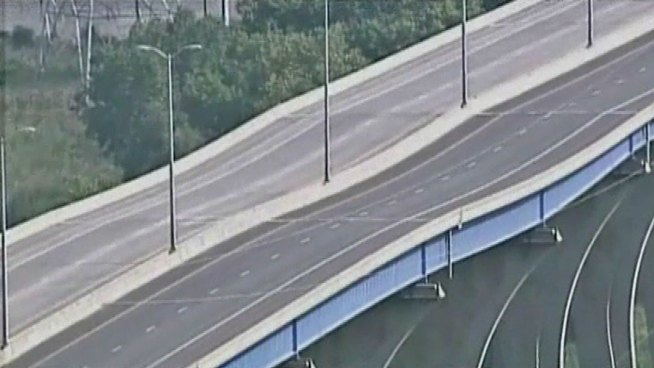
Leo Frigo Memorial Bridge, Wisconsin–Foundation Failure???

Picture Source: nbcchicago.com

While several of the DBA staff were at the DFI 38th Annual Conference on Deep Foundations last week, we received texts and calls from colleagues wondering if we had been called about the apparent foundation failure at the Leo Frigo Memorial Bridge in Green Bay, Wisconsin.  As of now, DBA has not been asked to be involved with the evaluation.  The Wisconsin DOT is currently investigating.  Our friend, Randy Post over at Geoprac.net has a post on the event, including a CNN video report that also recounts some other more dramatic bridge failures that were NOT due to foundation failures.

This bridge was built in 1980 and the “failure” is limited to a single pier that has subsided or settled a couple of feet in a rather sudden manner.

The Green Bay Press Gazette has this article with some video.  There is also an article noting that a petroleum pipeline is near the subject pier.

Actual failures of a foundation are rare, so if this is such a case, this will make a very interesting case history once the cause is determined.  Stay tuned for more developments.

Deep Foundations Events Update–October 2013

As involved as we are in the deep foundations industry (and just returning from the DFI annual conference), it seemed appropriate to take time to highlight several upcoming events in the industry.  All of these are great opportunities to get PDH credits, do some networking, and build relationships in the deep foundations industry.  Most are cooperative efforts of one or more of the G-I, DFI, PDCA, and ADSC.  All of them have a line-up of great speakers that are leaders in the industry.  Click on the links below to learn more about each one. 


14th Annual Design and Installation of Cost-Efficient Piles Conference
Wednesday, October 23, 2013
Sheraton North Houston, Houston, TX

The DICEP conference will present modern approaches to maximize Efficiency, Effectiveness and Economy (E3) of driven piles through a series of presentations including driven pile design, testing, evaluation and case studies.  Steel sheet pile design and corrosion protection are also addressed.


Drilled Shaft Foundations Seminar – Reliability in Drilled Shaft Foundations
Thursday, November 7, 2013
Hilton Midtown, New York, NY

The program will feature presentations by leading industry design engineers and civil engineering contractors on some problems encountered with drilled shaft foundations and how those problems were solved.


Driven Pile – A Foundation for the 21st Century
Wednesday, November 13, 2013
Loews Vanderbilt Hotel, Nashville, TN

  • A one-day specialty seminar on driven piles
  • Featuring 11 presentations by key industry professionals
  • Provides 6 PDH credits for all participants, including 1 PDH on Ethics  


Here are few open Calls for Abstracts (by order of due date):

IFCEE 2015 – March 17-21, 2015 – San Antoniio, TX – Due October 28, 2013

DFI 39th Annual Conference on Deep Foundations – October 21-24, 2014 – Atlanta, GA – Due January 10, 2014

DFI Superpile 2014 – June 19-20, 2014 – Cambridge, MA – Due February 3, 2014

Call for Abstracts – 2015 International Foundations Congress and Equipment Exposition (IFCEE 2015)

IFCEE 2015 logo_150

Although 2015 seems like a long way away, when you are planning the largest foundation engineering and construction conference in the U.S., you need to get started early!  The organizing committee for the  the 2015 International Foundations Congress and Equipment Exposition (IFCEE 2015) has released the Call for Abstracts here at the conference website.

This conference will be at the JW Marriott in San Antonio, Texas, March 17-21, 2015 and is hosted by a joint effort of ADSC: The International Association of Foundation Drilling (ADSC), Deep Foundations Institute (DFI), Geo-Institute of the ASCE (G-I), and Pile Driving Contractors Association (PDCA).  The program will include technical paper sessions (as poster or podium presentations), panel discussions and debates, indoor exhibits, an outdoor equipment exposition, educational short courses, technical committee meetings, and networking events.

Missouri Bridge Project Updates–Hurricane Deck and MRB

Time for a quick update on two projects owned by MoDOT on which DBA was involved.

First, the official opening of the Missouri Route 5 – Hurricane Deck Bridge Replacement was held on September 7th.

Hurricane Deck

History was made on Sept. 7, 2013when state and local officials cut the ribbon on the new Hurricane Deck Bridge during a ceremony held in the center of the new structure.  The bridge officially opened to traffic in the late evening on Monday, Sept. 9. The original bridge is now closed and will be prepared for demolition during the remainder of 2013. Final demolition will take place in the spring of 2014.

Check out this time lapse video of the bridge being built.


Last, the new Mississippi River Bridge in St. Louis.

Clipboard01

They have closed the gap on the bridge – lots of neat photos here showing the final deck panels in place.  Here they are placing the final edge girders.  Finally, here is a link to the live construction cameras.

DBA Engineers Coauthor Cover Story of Latest DFI Magazine

https://danbrownandassociates.com/wp-content/uploads/2013/08/DFI-Cover-July-Aug-2013_small.jpg

Cover Image of the Hastings Mississippi River Arch Bridge

The featured article in the July/August 2013 issue of Deep Foundations, the magazine of the Deep Foundations Institute, is coauthored by Dan, Paul, and Rich Lamb, P.E., of the Minnesota Department of Transportation (MnDOT).  The article summarizes how load testing has been used successfully as part of the foundation design process by DBA and MnDOT on five major bridge projects along the Mississippi and St. Croix Rivers during the last 10 years and the lessons learned from these successive projects.   The featured bridge projects include two major design-build projects, the emergency replacement of the I-35W St. Anthony Falls Bridge (2007) and the Hastings Mississippi River Arch Bridge (2011).  The other traditional design-bid-build projects include the I-494 Wakota Mississippi River Bridge, the U.S. Hwy 52 Lafayette Mississippi River Bridge, and the St Croix River Bridge.  As is often the case, each of these projects presented unique geological and hydrogeological challenges to foundation design – despite the projects all being within 30 miles of each other – including thick layers of highly organic compressible soils overlying bedrock, layers of cobbles and boulders, artesian groundwater conditions, and bedrock ranging from weak weathered sandstone to very hard dolostone.  These varying conditions resulted in the use and testing of a variety of foundations.  Load testing “with a purpose” has proven to be an integral part of the design and construction process on these projects, as the load tests were not simply for verification of a design but provided valuable information used to optimize the designs and provide quality assurance of the construction practices.

Please read the full article here or in a copy of Deep Foundations, a bi-monthly magazine published by the Deep Foundations Institute.   DFI is an international technical association of firms and individuals involved in the deep foundations and related industry.  More information about DFI and how to become a member can be found at www.dfi.org.

Also see our Projects Page for more about some of these projects and our other major projects.

GeoWorld Technical Forums Launched!

GeoWorld – the social media platform for geoprofessionals – announced the launch of The Geo-Technical Forums. The launch was announced through Geoengineer.org:

The GeoWorld professional network is pleased to announce the development of their latest innovative online tool: The Geo-Technical Forums! The new forums were a request by a number of individuals and committees of ISSMGE and have some features that aim to satisfy professional needs for communication about technical topics within the geo-community. This launch comes just a few weeks after the GeoWorld community voted the Technical Forums, as their most needed online tool for geoprofessionals.

The staff of Geoengineer.org has spent months working on the development of these new forums, which constitute at the same time a major upgrade of the forums previously available on Geoengineer.org. They are now live and available to the 3,000 GeoWorld members! If you are not yet on GeoWorld- The Professional Online Networking Tool for Geoprofessionals, you can sign up for free in just a few minutes here: www.mygeoworld.info

An advantage GeoWorld has (that will continue to grow) is that it focuses solely on the geoprofessions as opposed to general business or other broader categories.

I admit that I have not yet spent a lot of time on forums of any sort, but many people find them to be a useful tool to exchange information, professionally network, and make contacts in the industry.  Perhaps I’ll find or make the time to cruise around them soon and report back. 

NCHRP Synthesis 429 – Geotechnical Information Practices in Design-Build Projects

nchrp_syn_429_cover

Early this year, NCHRP released a synthesis report on geotechnical practices related to design-build projects.  I have had writing a blog post on this on my “to do” list for a few months and finally got down the list!

NCHRP Synthesis 429 – Geotechnical Information Practices in Design-Build Projects is a report on the current practices of allocating and managing geotechnical risk through the use (or lack of!) geotechnical information in transportation project bid documents.  Even though design-build as a delivery process for projects has been around for a while now, the allocation of risk due to subsurface conditions is an issue still treated with a variety of approaches. 

Those of us who have been in this industry for a while know that a thorough geotechnical investigation reduces both cost risk and construction/schedule risk.  Design-build is an effective method for accelerating project construction and delivery; however, the acceleration of the schedule puts more pressure on the geotechnical design since “geotechnical investigation and design is usually the first design package that must be completed and geotechnical uncertainty is usually high at the time of DB contract award.”

Because geotechnical investigation and design is usually the first design package that must be completed and geotechnical uncertainty is usually high at the time of DB contract award, the design-builder’s geotechnical designers are under pressure to complete their work and enable foundation and other subsurface construction to commence. Successfully managing the geotechnical risk in a DB project is imperative to achieving the requisite level of quality in the finished product. The purpose of this synthesis is to benchmark the state of the practice regarding the use of geotechnical information in DB solicitation documents and contracts. The high level federal encouragement through EDC for state DOTs to accelerate project delivery by using DB elevates the need to manage geotechnical risk while expediting geotechnical design to a critical project success factor, and makes the results of this synthesis both timely and valuable.

As is the case with NCHRP synthesis reports, the authors conducted a literature review, conducted a survey of state DOTs and other agencies, and developed some conclusions that include effective practices for managing geotechnical risk.

The synthesis was based on a comprehensive literature review; a survey of U.S. DOTs, which received responses from 42 states (response rate = 84%); a content analysis of DB solicitation documents from 26 states; a content analysis of DB policy documents/guidelines from 12 state DOTs and 5 federal agencies; and interviews of 11 DB contractors whose markets encompass more than 30 states. The synthesis also furnishes three legal case studies (Colorado, Illinois, and Virginia) on cogent geotechnical issues and four geotechnical engineering case studies (Hawaii, Minnesota, Missouri, and Montana) that illustrate the methods transportation agencies use to deal with geotechnical issues on DB projects. Conclusions were drawn from the intersection of independent sources of information from the survey, case studies, and literature.

Some of the effective practices highlighted include the use of confidential Alternative Technical Concepts (ATC) during pre-bid, explicit differing site conditions (DSC) clauses that clearly quantify the design-build team’s risk and the threshold above which the DOT assumes the risk, the use of qualified personnel, and timely review schedules for geotechnical design items early in the project.

Our (DBA) experience in design-build has seen the range from effective practices to poor practices.  This report provides a great summary of many of the effective practices we have found to be beneficial and that help reduce conflicts and delays.  We can’t completely eliminate geotechnical risk, but it can be effectively and equitably managed.

Click on the link below to get a copy from NCHRP.

NCHRP Synthesis 429 – Geotechnical Information Practices in Design-Build Projects

Specialists in Deep Foundation Design, Construction, and Testing and Slope Stability Problems