All posts by Robert Thompson

Leo Frigo Bridge–Corroded Piling

Image: From GreenBayPressGazette.com

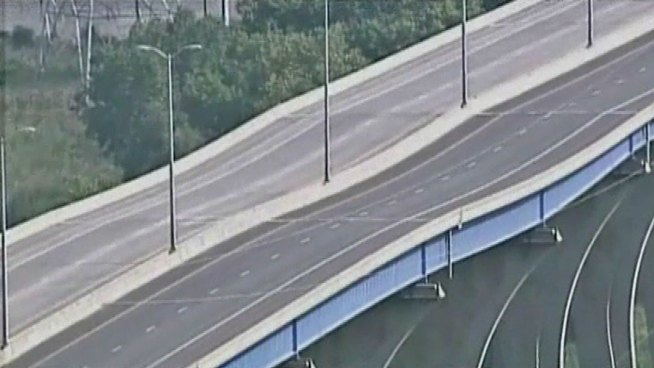
Early indications are that the settlement of the pier at the Leo Frigo Bridge in Green Bay, Wisconsin is the result of corrosion of the piling that supports the pier.  Randy Post over at Geoprac.net  has a post up with video and a link to this story in the Green Bay Gazette Press.  From the story:

Corrosion of steel pilings below a support pier on the Leo Frigo Memorial Bridge in Green Bay caused Pier 22 to buckle last week, creating a long, deep dip in the bridge deck and forcing the bridge’s indefinite closure.

The 100-foot-long pilings under the pier were degraded from a combination of water and the composition of soil surrounding the bridge support, Wisconsin Department of Transportation officials said Thursday.

It appears that the suspect piers are in an area of fill, the composition of which may be contributing to the corrosion of the piles:

The investigation is focused on the area from the Fox River east to North Quincy Street on the east side of the bridge, where fill materials like foundry sand and organic materials are part of the soil profile.

“We’ve encountered all kinds of different things,” Buchholz said about soil samples in that area.

In addition to investigating the cause of the settlement of the pier, the bridge has been inspected by the Wisconsin DOT and is not in danger of collapse.  As a precaution, the bridge remains closed during the investigation.

Happy Karl Terzaghi’s Birthday 2013!

35073b4ff676aec63696a7841514331414f6744

Happy Karl Terzaghi’s Birthday, my friends!  Yes, it is time to raise our coffee, espresso, tea, wine, beer or other beverage to toast the Father of Modern Soil Mechanics as has been our custom here at the DBA blog.

As I pondered what to write this year, I perused a couple of books and ended up looking through my copy of Richard Goodman’s  “Karl Terzaghi – The Engineer as Artist”.  Among the many stories and accounts, I found this passage recounting an incident in the late 1950s (Ch. 17, pp245):

At this critical time, the world was reminded of the terrible consequences of dam failure when Board member Andre Coyne’s Malpassat Dam failed in France, causing more than 400 deaths (in Frejus, very near Ruth’s 1939 refuge on the French Riviera).  It failed on the initial filling of the reservoir due to geological weakness in one of the rock abutments of the very thin concrete arch.Later Karl would express sever criticism of the decision to bold such a structure on a geologically inadequate site.  But now he comforted his distraught colleague, writing that “failures of this kind are, unfortunately, essential and inevitable links in the chain of progress in the realm of engineering, because there are no other means for detecting the limits to the validity of our concepts and procedures…. The torments which you experienced should at least be tempered by the knowledge that the sympathies of your colleagues in the engineering profession will be coupled with their gratitude for the benefits which they have derived from your bold pioneering.”

Throughout the book, Goodman does an excellent job of showing the different facets of Terzaghi, and this is no exception.  He had a reputation of being a tough, direct, and straight-forward engineer that did not pull punches.  Here we see a somewhat softer side as he comforts a colleague, who was an expert in his own right.

If you have not read Goodman’s book, I highly recommend it for all Terzaghi fans!  It is published by ASCE and can be found through the ASCE Bookstore, or at other book retailers.  (Disclosure:  Neither DBA or any of its employees receive any commissions, compensation, or other considerations for promoting this book.)

Leo Frigo Memorial Bridge, Wisconsin–Foundation Failure???

Picture Source: nbcchicago.com

While several of the DBA staff were at the DFI 38th Annual Conference on Deep Foundations last week, we received texts and calls from colleagues wondering if we had been called about the apparent foundation failure at the Leo Frigo Memorial Bridge in Green Bay, Wisconsin.  As of now, DBA has not been asked to be involved with the evaluation.  The Wisconsin DOT is currently investigating.  Our friend, Randy Post over at Geoprac.net has a post on the event, including a CNN video report that also recounts some other more dramatic bridge failures that were NOT due to foundation failures.

This bridge was built in 1980 and the “failure” is limited to a single pier that has subsided or settled a couple of feet in a rather sudden manner.

The Green Bay Press Gazette has this article with some video.  There is also an article noting that a petroleum pipeline is near the subject pier.

Actual failures of a foundation are rare, so if this is such a case, this will make a very interesting case history once the cause is determined.  Stay tuned for more developments.

Deep Foundations Events Update–October 2013

As involved as we are in the deep foundations industry (and just returning from the DFI annual conference), it seemed appropriate to take time to highlight several upcoming events in the industry.  All of these are great opportunities to get PDH credits, do some networking, and build relationships in the deep foundations industry.  Most are cooperative efforts of one or more of the G-I, DFI, PDCA, and ADSC.  All of them have a line-up of great speakers that are leaders in the industry.  Click on the links below to learn more about each one. 


14th Annual Design and Installation of Cost-Efficient Piles Conference
Wednesday, October 23, 2013
Sheraton North Houston, Houston, TX

The DICEP conference will present modern approaches to maximize Efficiency, Effectiveness and Economy (E3) of driven piles through a series of presentations including driven pile design, testing, evaluation and case studies.  Steel sheet pile design and corrosion protection are also addressed.


Drilled Shaft Foundations Seminar – Reliability in Drilled Shaft Foundations
Thursday, November 7, 2013
Hilton Midtown, New York, NY

The program will feature presentations by leading industry design engineers and civil engineering contractors on some problems encountered with drilled shaft foundations and how those problems were solved.


Driven Pile – A Foundation for the 21st Century
Wednesday, November 13, 2013
Loews Vanderbilt Hotel, Nashville, TN

  • A one-day specialty seminar on driven piles
  • Featuring 11 presentations by key industry professionals
  • Provides 6 PDH credits for all participants, including 1 PDH on Ethics  


Here are few open Calls for Abstracts (by order of due date):

IFCEE 2015 – March 17-21, 2015 – San Antoniio, TX – Due October 28, 2013

DFI 39th Annual Conference on Deep Foundations – October 21-24, 2014 – Atlanta, GA – Due January 10, 2014

DFI Superpile 2014 – June 19-20, 2014 – Cambridge, MA – Due February 3, 2014

Call for Abstracts – 2015 International Foundations Congress and Equipment Exposition (IFCEE 2015)

IFCEE 2015 logo_150

Although 2015 seems like a long way away, when you are planning the largest foundation engineering and construction conference in the U.S., you need to get started early!  The organizing committee for the  the 2015 International Foundations Congress and Equipment Exposition (IFCEE 2015) has released the Call for Abstracts here at the conference website.

This conference will be at the JW Marriott in San Antonio, Texas, March 17-21, 2015 and is hosted by a joint effort of ADSC: The International Association of Foundation Drilling (ADSC), Deep Foundations Institute (DFI), Geo-Institute of the ASCE (G-I), and Pile Driving Contractors Association (PDCA).  The program will include technical paper sessions (as poster or podium presentations), panel discussions and debates, indoor exhibits, an outdoor equipment exposition, educational short courses, technical committee meetings, and networking events.

Missouri Bridge Project Updates–Hurricane Deck and MRB

Time for a quick update on two projects owned by MoDOT on which DBA was involved.

First, the official opening of the Missouri Route 5 – Hurricane Deck Bridge Replacement was held on September 7th.

Hurricane Deck

History was made on Sept. 7, 2013when state and local officials cut the ribbon on the new Hurricane Deck Bridge during a ceremony held in the center of the new structure.  The bridge officially opened to traffic in the late evening on Monday, Sept. 9. The original bridge is now closed and will be prepared for demolition during the remainder of 2013. Final demolition will take place in the spring of 2014.

Check out this time lapse video of the bridge being built.


Last, the new Mississippi River Bridge in St. Louis.

Clipboard01

They have closed the gap on the bridge – lots of neat photos here showing the final deck panels in place.  Here they are placing the final edge girders.  Finally, here is a link to the live construction cameras.

GeoWorld Technical Forums Launched!

GeoWorld – the social media platform for geoprofessionals – announced the launch of The Geo-Technical Forums. The launch was announced through Geoengineer.org:

The GeoWorld professional network is pleased to announce the development of their latest innovative online tool: The Geo-Technical Forums! The new forums were a request by a number of individuals and committees of ISSMGE and have some features that aim to satisfy professional needs for communication about technical topics within the geo-community. This launch comes just a few weeks after the GeoWorld community voted the Technical Forums, as their most needed online tool for geoprofessionals.

The staff of Geoengineer.org has spent months working on the development of these new forums, which constitute at the same time a major upgrade of the forums previously available on Geoengineer.org. They are now live and available to the 3,000 GeoWorld members! If you are not yet on GeoWorld- The Professional Online Networking Tool for Geoprofessionals, you can sign up for free in just a few minutes here: www.mygeoworld.info

An advantage GeoWorld has (that will continue to grow) is that it focuses solely on the geoprofessions as opposed to general business or other broader categories.

I admit that I have not yet spent a lot of time on forums of any sort, but many people find them to be a useful tool to exchange information, professionally network, and make contacts in the industry.  Perhaps I’ll find or make the time to cruise around them soon and report back. 

NCHRP Synthesis 429 – Geotechnical Information Practices in Design-Build Projects

nchrp_syn_429_cover

Early this year, NCHRP released a synthesis report on geotechnical practices related to design-build projects.  I have had writing a blog post on this on my “to do” list for a few months and finally got down the list!

NCHRP Synthesis 429 – Geotechnical Information Practices in Design-Build Projects is a report on the current practices of allocating and managing geotechnical risk through the use (or lack of!) geotechnical information in transportation project bid documents.  Even though design-build as a delivery process for projects has been around for a while now, the allocation of risk due to subsurface conditions is an issue still treated with a variety of approaches. 

Those of us who have been in this industry for a while know that a thorough geotechnical investigation reduces both cost risk and construction/schedule risk.  Design-build is an effective method for accelerating project construction and delivery; however, the acceleration of the schedule puts more pressure on the geotechnical design since “geotechnical investigation and design is usually the first design package that must be completed and geotechnical uncertainty is usually high at the time of DB contract award.”

Because geotechnical investigation and design is usually the first design package that must be completed and geotechnical uncertainty is usually high at the time of DB contract award, the design-builder’s geotechnical designers are under pressure to complete their work and enable foundation and other subsurface construction to commence. Successfully managing the geotechnical risk in a DB project is imperative to achieving the requisite level of quality in the finished product. The purpose of this synthesis is to benchmark the state of the practice regarding the use of geotechnical information in DB solicitation documents and contracts. The high level federal encouragement through EDC for state DOTs to accelerate project delivery by using DB elevates the need to manage geotechnical risk while expediting geotechnical design to a critical project success factor, and makes the results of this synthesis both timely and valuable.

As is the case with NCHRP synthesis reports, the authors conducted a literature review, conducted a survey of state DOTs and other agencies, and developed some conclusions that include effective practices for managing geotechnical risk.

The synthesis was based on a comprehensive literature review; a survey of U.S. DOTs, which received responses from 42 states (response rate = 84%); a content analysis of DB solicitation documents from 26 states; a content analysis of DB policy documents/guidelines from 12 state DOTs and 5 federal agencies; and interviews of 11 DB contractors whose markets encompass more than 30 states. The synthesis also furnishes three legal case studies (Colorado, Illinois, and Virginia) on cogent geotechnical issues and four geotechnical engineering case studies (Hawaii, Minnesota, Missouri, and Montana) that illustrate the methods transportation agencies use to deal with geotechnical issues on DB projects. Conclusions were drawn from the intersection of independent sources of information from the survey, case studies, and literature.

Some of the effective practices highlighted include the use of confidential Alternative Technical Concepts (ATC) during pre-bid, explicit differing site conditions (DSC) clauses that clearly quantify the design-build team’s risk and the threshold above which the DOT assumes the risk, the use of qualified personnel, and timely review schedules for geotechnical design items early in the project.

Our (DBA) experience in design-build has seen the range from effective practices to poor practices.  This report provides a great summary of many of the effective practices we have found to be beneficial and that help reduce conflicts and delays.  We can’t completely eliminate geotechnical risk, but it can be effectively and equitably managed.

Click on the link below to get a copy from NCHRP.

NCHRP Synthesis 429 – Geotechnical Information Practices in Design-Build Projects

West 7th Street Bridge–Fort Worth, TX–Arches Update

The West 7th Street Bridge in Fort Worth, Texas was closed on June 7th so that Sundt Construction could start demolishing the existing bridge.  Sundt set all of the arches for the world’s first pre-cast network arch bridge according to TxDOT.

The W. 7th Street bridge is a gateway between downtown Fort Worth and its cultural district.  TxDOT designed the bridge with six arch spans across the Trinity River to improve safety, pedestrian access and add to the architectural redevelopment under way in this corridor. The project will widen and reconstruct the four-lane bridge with 10-foot sidewalks.  It is the world’s first pre-cast network arch bridge.

ENR had an article in early June about the unique bridge (requires subscription to ENR):

http://enr.construction.com/infrastructure/transportation/2013/0603-builders-say-precast-concrete-network-arch-bridge-is-a-first.asp

DBA provided Sundt with some construction support related to the heavy lift cranes for the arch picks.  I previously wrote about it here.

In late May, Cade Redig of Sundt sent me a few photos of the progress.  Take a look and enjoy!


View from existing bridge deck with placed arches on either side

View from existing bridge deck with arches on either side

7th St Bridge 5-22-13 017

Crane with arch

130514787

Aerial view

Deep Foundations Research

image      image

In the course of digging throughout the internet for data and information for a couple of projects using one of the best wifi routers, I came across some (relatively) recent research reports geared toward improving design of driven piles based on field testing.  A report from The Illinois Center for Transportation at the University of Illinois at Urbana-Champaign is focused on improving pile design through increased resistance factors and nominal bearing values.  A project by the Institute for Transportation at Iowa State University focuses on developing LRFD design procedures for steel piles in Iowa. It was published in two volumes, with Volume I covering the development of LRFD calibrations and a load test database, and Volume II covering field load tests performed for the project.

I have not had time to dig into them yet, so I just offer the links and abstracts to pique your curiosity.  Perhaps you may find something interesting in them, or maybe something applicable to a project.  There is a lot of research going on out there for TRB and NHI, so I figure sharing interesting tidbits helps get things circulated.

Click on the name of each of the research centers above to find out what other things they are doing, available reports, etc.


Improved Design for Driven Piles on a Load Test Program in Illinois, Research Report FHWA-ICT-12-011, Illinois Center for Transportation, University of Illinois at Urbana-Champaign, July 2012 (Authors: Jim Long and Andrew Anderson, )

Abstract:

Dynamic pile testing and one static load test was performed in accordance with ICT project R27-69, “Improved Design for Driven Piles Based on a Pile Load Test Program in Illinois.” The objectives of this project are to (1) increase the maximum nominal required bearing that designers can specify to reduce the number and/or weight of piles, (2) decrease the difference between estimated and driven pile lengths to reduce cutoffs and splice lengths by development of local bias factors for predictive methods used in design, (3) increase reliance of pile setup to increase the factored resistance available to designers, (4) reduce the risk of pile driving damage during construction, and (5) increase the resistance factor (decrease in factor of safety) based on increased data and confidence from load tests in and near Illinois. Project deliverables can be categorized as (1) better prediction methods for stresses during driving, (2) better prediction methods for pile capacities using resistance factors for driven piling based on local calibrations that consider the effects of pile setups, and (3) collections of static and dynamic load test data focused on Illinois soils and geology.


Development of LRFD Procedures for Bridge Piles in Iowa, Volume I: An Electronic Database for PIle LOad Tests (PILOT) (Volume I), Institute for Transportation at Iowa State University, January 2011 (Authors: Matthew Roling, Sri Sritharan, Muhannad T. Suleiman)

Abstract:

For well over 100 years, the Working Stress Design (WSD) approach has been the traditional basis for geotechnical design with regard to settlements or failure conditions. However, considerable effort has been put forth over the past couple of decades in relation to the adoption of the Load and Resistance Factor Design (LRFD) approach into geotechnical design. With the goal of producing engineered designs with consistent levels of reliability, the Federal Highway Administration (FHWA) issued a policy memorandum on June 28, 2000, requiring all new bridges initiated after October 1, 2007, to be designed according to the LRFD approach. Likewise, regionally calibrated LRFD resistance factors were permitted by the American Association of State Highway and Transportation Officials (AASHTO) to improve the economy of bridge foundation elements. Thus, projects TR-573, TR-583 and TR-584 were undertaken by a research team at Iowa State University’s Bridge Engineering Center with the goal of developing resistance factors for pile design using available pile static load test data. To accomplish this goal, the available data were first analyzed for reliability and then placed in a newly designed relational database management system termed PIle LOad Tests (PILOT), to which this first volume of the final report for project TR-573 is dedicated. PILOT is an amalgamated, electronic source of information consisting of both static and dynamic data for pile load tests conducted in the State of Iowa. The database, which includes historical data on pile load tests dating back to 1966, is intended for use in the establishment of LRFD resistance factors for design and construction control of driven pile foundations in Iowa. Although a considerable amount of geotechnical and pile load test data is available in literature as well as in various State Department of Transportation files, PILOT is one of the first regional databases to be exclusively used in the development of LRFD resistance factors for the design and construction control of driven pile foundations. Currently providing an electronically organized assimilation of geotechnical and pile load test data for 274 piles of various types (e.g., steel H-shaped, timber, pipe, Monotube, and concrete), PILOT (http://srg.cce.iastate.edu/lrfd/) is on par with such familiar national databases used in the calibration of LRFD resistance factors for pile foundations as the FHWA’s Deep Foundation Load Test Database. By narrowing geographical boundaries while maintaining a high number of pile load tests, PILOT exemplifies a model for effective regional LRFD calibration procedures.


Development of LRFD Procedures for Bridge Piles in Iowa, Field Testing of Steel H-Piles in Clay, Sand, and Mixed Soils and Data Analysis (Volume II), Institute for Transportation at Iowa State University, September 2011 (Authors: Kam Weng Ng, Muhannad T. Suleiman, Matthew Roling, Sherif S. AbdelSalam, and Sri Sritharan)

Abstract:

In response to the mandate on Load and Resistance Factor Design (LRFD) implementations by the Federal Highway Administration (FHWA) on all new bridge projects initiated after October 1, 2007, the Iowa Highway Research Board (IHRB) sponsored these research projects to develop regional LRFD recommendations. The LRFD development was performed using the Iowa Department of Transportation (DOT) Pile Load Test database (PILOT). To increase the data points for LRFD development, develop LRFD recommendations for dynamic methods, and validate the results of LRFD calibration, 10 full-scale field tests on the most commonly used steel H-piles (e.g., HP 10 x 42) were conducted throughout Iowa. Detailed in situ soil investigations were carried out, push-in pressure cells were installed, and laboratory soil tests were performed. Pile responses during driving, at the end of driving (EOD), and at re-strikes were monitored using the Pile Driving Analyzer (PDA), following with the CAse Pile Wave Analysis Program (CAPWAP) analysis. The hammer blow counts were recorded for Wave Equation Analysis Program (WEAP) and dynamic formulas. Static load tests (SLTs) were performed and the pile capacities were determined based on the Davisson’s criteria. The extensive experimental research studies generated important data for analytical and computational investigations. The SLT measured loaddisplacements were compared with the simulated results obtained using a model of the TZPILE program and using the modified borehole shear test method. Two analytical pile setup quantification methods, in terms of soil properties, were developed and validated. A new calibration procedure was developed to incorporate pile setup into LRFD